
Days passed. Then weeks.
No one came.
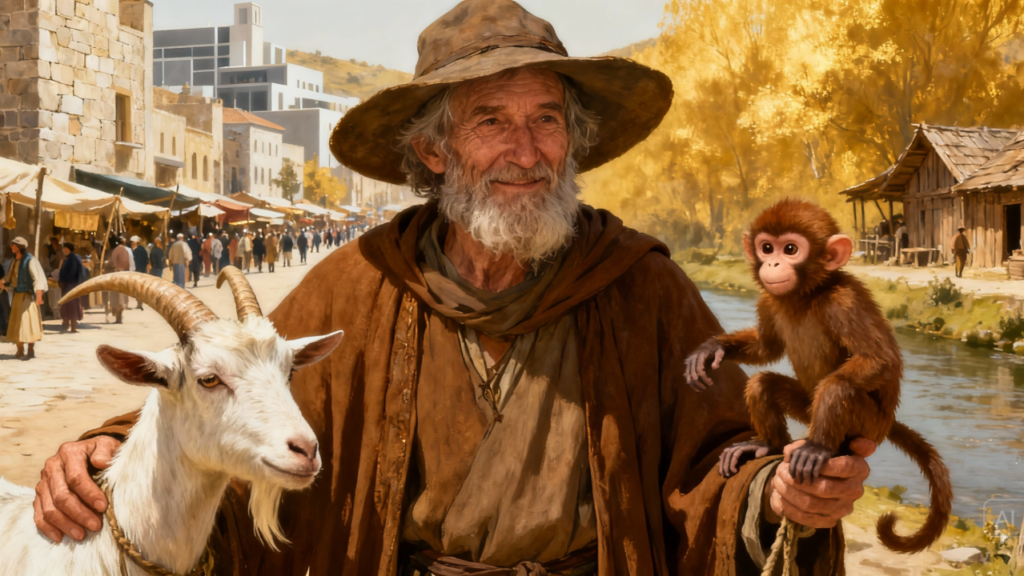
The monkeys, it turned out, were a nightmare. They weren’t tame creatures—they shrieked day and night, destroyed homes, ate through food stores, and bit anyone who came near. The townspeople couldn’t sell them, couldn’t use them, and couldn’t even give them away.
Eventually, most people just opened their doors and let the monkeys escape, trying to forget how much silver they’d lost.
The Town of Millbrook
In nearby Millbrook, a similar drama unfolded, but with a crucial difference.
A merchant arrived offering 1,000 silver coins per goat. Goats were valuable, certainly, but not that valuable. Still, the price was too good to refuse, and soon every goat in town had been sold.
The next day, predictably, a second merchant appeared offering 2,000 silver coins each.
The first merchant wouldn’t sell. And just like in Riverside, the townspeople eventually repurchased their own goats, this time for 3,000 silver coins apiece.
The merchants vanished.
No third buyer appeared.
The people of Millbrook had also been played for fools. They’d lost silver just as the people of Riverside had.
But here’s what saved them: goats aren’t monkeys.
Each morning, the goats could be milked. That milk could be drunk, made into cheese, or sold at market. The goats produced kids, which grew into more goats. They provided wool. They cleared brush from the fields.
Yes, the townspeople had overpaid badly.
But they’d overpaid for something with genuine, lasting value.
Over time, they recovered their losses. The goats, expensive as they were, still served a purpose.
The Moral?
When markets are running hot and prices climb beyond reason, fools will always appear willing to pay absurd sums, hoping a greater fool will come along to pay even more.
If you’re going to play that game, at least make sure you’re buying goats, not monkeys.
Buy something with real value, something that produces, earns, and serves a purpose even if no greater fool ever appears.
Because when the music stops and the clever merchants have moved on to the next town, you’ll be left holding what you bought.
And you’d better hope it’s something worth keeping.